
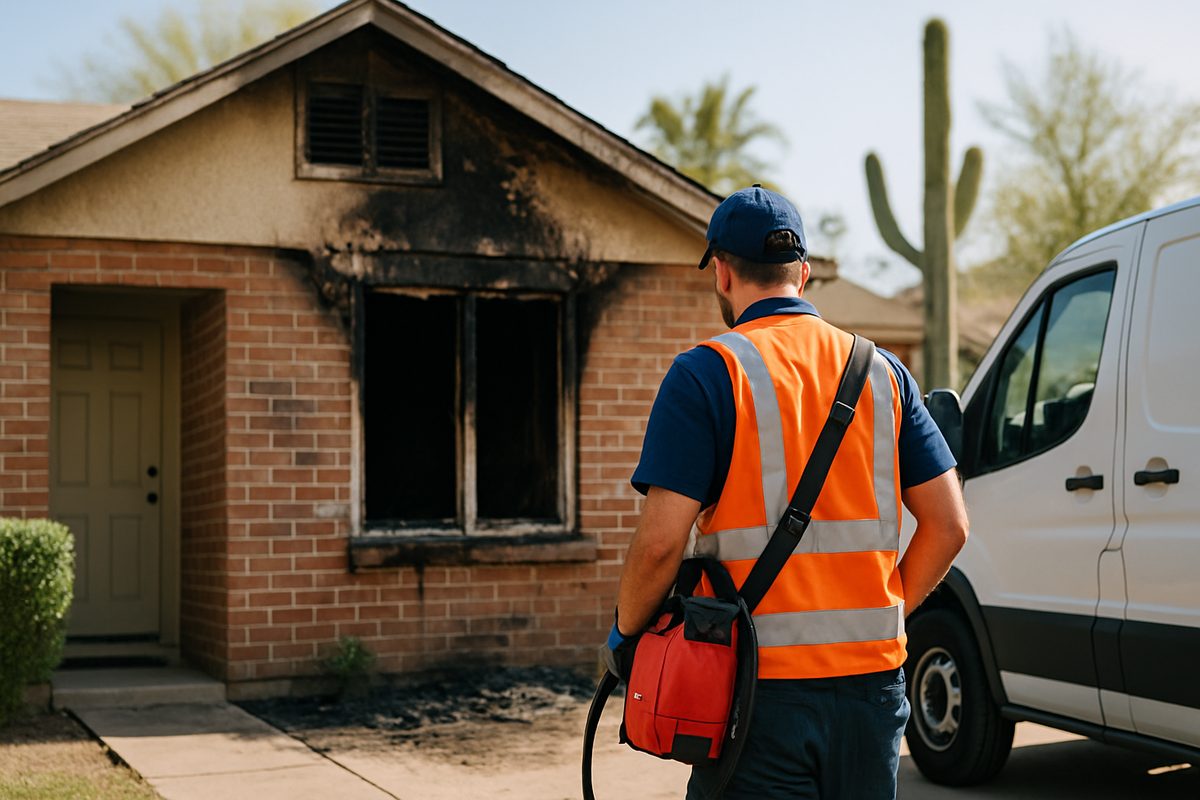
A house fire can force you out in under two minutes. What follows is slower and far more confusing. The trucks leave, the street empties, and you are standing outside a house you no longer recognise. What you do in the next twenty-four hours affects your claim, your rebuild cost, and how much of your property survives. This is the order to do it in.
Key Takeaways
- ›Do not re-enter or restore utilities until the fire department clears the property.
- ›Photograph everything before any cleaning, then call your insurer for a claim number.
- ›Firefighting water starts a mold clock within days, so drying cannot wait.
Hour 0 to 2: Stay Out and Get Clearance
The most expensive mistake in the first hour is walking back inside too early.
Wait for an official all-clear
Do not enter your home or touch utilities until local authorities and the fire department confirm it is safe. Structures weakened by heat fail without warning. Roof decking, floor joists, and stair stringers are the usual culprits. The American Red Cross is blunt on this point: get out, stay out, and never go back inside for anything or anyone.
Leave gas, water, and power alone
Resist the urge to flip a breaker or relight a pilot. Wiring insulation degrades in heat, and a re-energised circuit can start a second fire. Utilities should be restored only after a professional inspection. If a utility was shut off at the street, leave it that way.
Hour 2 to 6: Protect the Claim Before You Clean
Your instinct will be to start clearing up. Resist it for a few more hours.
Photograph before you touch anything
Document every room, every wall, and every damaged item while the scene is untouched. Wide shots establish context and close shots establish detail. Adjusters reduce payouts on damage nobody recorded. Keep the originals rather than edited copies.
Open the claim and ask three questions
Call your insurer and get a claim number the same day. Ask what your policy covers for emergency board-up. Ask what your temporary lodging allowance is. Ask whether you may choose your own contractor, because you usually can.
Keep every receipt from hour one
Hotel nights, meals, clothing, and pet boarding are often reimbursable. Start a single folder or photo album for them immediately. Reconstructing spending a month later never goes well.
Hour 6 to 12: Stop the Second Disaster
Fire is the event people plan for. Water is the damage they forget.
Suppression water starts a mold clock
Putting out a house fire takes thousands of gallons. That water soaks drywall, insulation, subfloor, and framing. In a Phoenix summer, a closed-up house holds heat that accelerates microbial growth. Extraction and drying should begin within the first day, not after the structural assessment. This is why fire jobs and water damage restoration work belong on the same crew.
Get the building closed up
Broken windows and a vented roof invite weather, animals, and theft. Emergency board-up and tarping are usually covered as mitigation. Ask for photographs of the openings before they are covered.
Hour 12 to 24: Sort What Can Be Saved
Salvage decisions get easier once you know what typically survives.
What usually comes back
Non-porous items do well. Glass, ceramics, silverware, cast iron, and porcelain generally withstand high heat and can be decontaminated. Solid wood furniture is often restorable. Gold and silver have high melting points and can be professionally cleaned of soot.
What rarely does
Porous materials absorb smoke and hold odour. Mattresses, upholstered furniture, carpet padding, and opened food are usually total losses. Anything directly burned is gone. Speed matters here, because items cleaned quickly recover far more often than items left sitting in soot.
What Not to Do During the First Day
These are the errors that cost real money.
- Do not wipe soot with a dry cloth, which grinds particles into the surface.
- Do not run the HVAC system, which distributes soot through every duct.
- Do not turn utilities back on before a professional clearance.
- Do not throw anything away before the adjuster has seen it.
- Do not sign a broad repair contract on the doorstep the same night.
Why Phoenix Homes Complicate Fire Recovery
Desert construction and desert weather both change the aftermath.
Heat accelerates everything
A sealed house in a Phoenix summer becomes an oven once the power is off. Warm, damp material is exactly what mould needs. The drying window that might be a week elsewhere can be a couple of days here. That is the single strongest argument for same-day mitigation.
Ductwork spreads soot fast
Most homes here run central air through every room. Soot pulled into a return finds its way into ducts, coils, and insulation. Running the system even briefly turns a one-room problem into a whole-house one. Leave it off and have the ducts inspected separately.
Tile, stucco, and hidden cavities
Stucco and tile look untouched while moisture sits behind and beneath them. Surface appearance is a poor guide, so insist on meter readings rather than a visual check. Any fire damage restoration Phoenix crew worth hiring will offer those readings without being asked. Bright Home Construction documents them room by room.
How Long Full Restoration Actually Takes
Set expectations early, because the range is wide. Minor smoke-only damage from something like a stove flare-up typically runs three to seven days. A single-room fire with soot and water mitigation usually takes two to four weeks. Multiple rooms with structural or roof damage runs one to three months. A major structural compromise requiring a full rebuild can take six to twelve months.
Where you land depends on how fast mitigation started. The federal guidance in the U.S. Fire Administration's after-the-fire recovery resources covers the first twenty-four hours, insurance considerations, valuing property, replacing documents, and salvage. It is worth reading before your first contractor conversation.
Build the Inventory Before Memory Fades
Insurers settle contents claims from lists, not from recollection. Start yours on day one, while rooms are still recognisable.
Work room by room and record item, rough age, and replacement cost. Photograph serial numbers on appliances and electronics. Old purchase emails, bank statements, and even social media photographs of your rooms all help establish what you owned. Ask family members to send you pictures taken inside your home.
Do not discard damaged items before the adjuster documents them. A cleared room is very hard to claim against later. If something must go for safety reasons, photograph it thoroughly first and note why it was removed.
Expect this list to take longer than you think. It is also the single task that most often changes a settlement figure.
Frequently Asked Questions
Your First Call After the Fire Trucks Leave
The first day sets the tone for everything after it. Clearance, documentation, then drying, in that order.
Bright Home Construction runs fire damage repair services with 24-hour emergency response. Board-up, soot removal, and full reconstruction stay under one roof. We handle the water side the same day, because suppression water rarely waits politely.
If nothing has happened yet, our notes on protecting a home from fire damage are the cheaper version of this guide. Otherwise, call now. The fire damage restoration Phoenix homeowners actually need is the response that starts on day one.