
The Science of Evaporation in Water Damage Restoration, Phoenix, AZ
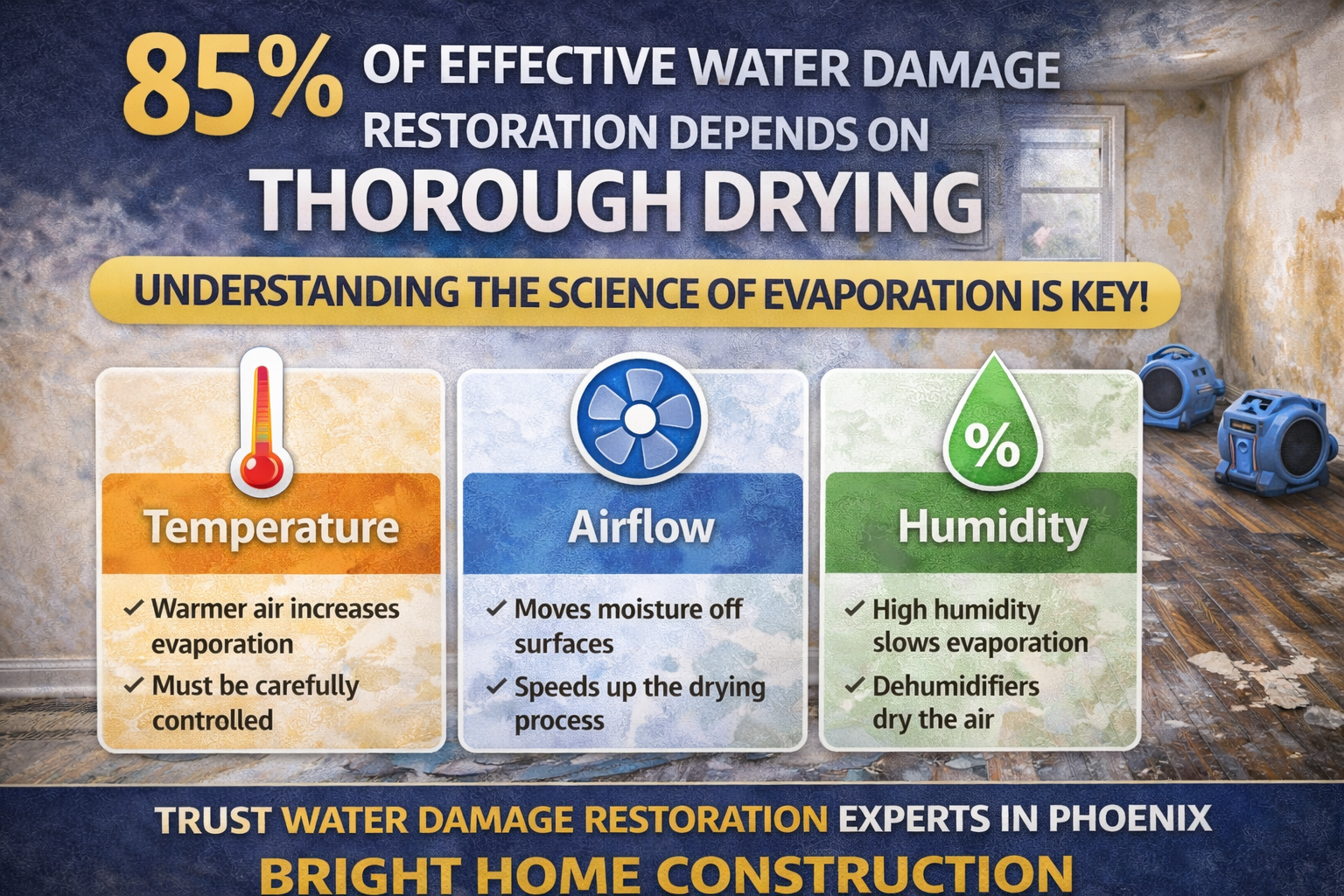
Did you know that over 85% of successful water damage restoration depends on proper drying and evaporation, not just water removal? Many homeowners assume that once standing water is gone, the job is done. In reality, the most critical phase begins after extraction, when hidden moisture must be evaporated from materials like drywall, wood, and flooring.
In a hot, dry city like Phoenix, evaporation might seem like a natural advantage. But without proper control, it can actually lead to uneven drying and more serious damage. That’s why professional Water Damage Restoration Phoenix, AZ services rely on the science of evaporation to ensure complete and effective recovery.
Table of Contents
- What Is Evaporation in Water Damage Restoration?
- Why Evaporation Matters More Than Water Removal
- Key Factors That Influence Evaporation
- The Role of Airflow and Temperature
- Humidity Control and Dehumidification
- How Materials Affect Drying Speed
- The Professional Drying Process Explained
- Common Mistakes in DIY Drying
- FAQs
- Conclusion
- About Bright Home Construction
What Is Evaporation in Water Damage Restoration?
Evaporation is the process of turning liquid water into vapor. In water damage restoration, this process is essential for removing moisture trapped within building materials.
Even after visible water is extracted, moisture remains embedded in surfaces. This is why professional Water Damage Repair Phoenix, AZ services focus heavily on controlled evaporation to ensure complete drying.
Why Evaporation Matters More Than Water Removal
Water extraction removes standing water, but it doesn’t address moisture absorbed into materials. Without proper evaporation, hidden moisture can lead to mold growth and structural damage.
Evaporation ensures that all moisture, both visible and hidden, is removed. This is why homeowners searching for Water Damage Restoration Near Me should prioritize services that emphasize advanced drying techniques.
Key Factors That Influence Evaporation
Temperature
Higher temperatures increase evaporation rates by providing energy for water molecules to transition into vapor.
However, excessive heat without proper airflow can cause uneven drying, leaving moisture trapped in deeper layers.
Airflow
Air movement accelerates evaporation by carrying moisture away from surfaces. Without airflow, evaporation slows significantly.
Professional equipment ensures consistent airflow across affected areas for efficient drying.
Humidity Levels
High humidity reduces the air’s ability to absorb additional moisture. This slows down the evaporation process.
Controlling humidity is essential for maintaining an effective drying environment.
The Role of Airflow and Temperature
Airflow and temperature work together to optimize evaporation. Warm air holds more moisture, while moving air removes that moisture from surfaces.
Professionals strategically place air movers to create a balanced drying environment. This ensures that moisture is evenly removed, preventing further damage.
Humidity Control and Dehumidification
Dehumidifiers play a critical role in water damage restoration. They remove moisture from the air, allowing evaporation to continue efficiently.
Without dehumidification, the air becomes saturated, slowing down the drying process. This is why Water Damage Restoration Phoenix, AZ services rely on advanced equipment to maintain optimal humidity levels.
How Materials Affect Drying Speed
Porous Materials
Materials like drywall, wood, and carpet absorb water quickly. These materials require more time and effort to dry completely.
Non-Porous Materials
Surfaces like tile and metal do not absorb water, making them easier to dry.
Layered Materials
Flooring systems and walls often have multiple layers, trapping moisture beneath the surface. This makes professional drying essential.
The Professional Drying Process Explained
Inspection and Moisture Mapping
Technicians begin by identifying all affected areas using advanced tools. This ensures no hidden moisture is overlooked.
Water Extraction
Standing water is removed using powerful extraction equipment.
Air Movement Setup
Air movers are strategically placed to maximize airflow across surfaces.
Dehumidification
Dehumidifiers remove moisture from the air, supporting continuous evaporation.
Monitoring and Adjustments
Professionals regularly monitor moisture levels and adjust equipment to ensure optimal drying conditions.
This comprehensive approach is what makes Water Damage Repair Phoenix, AZ services effective in preventing long-term damage.
Common Mistakes in DIY Drying
Relying on Natural Airflow
Opening windows or using fans may help slightly, but it’s not enough to remove deeply embedded moisture.
Ignoring Humidity Levels
Without controlling humidity, evaporation slows down, prolonging the drying process.
Stopping Too Early
Surfaces may feel dry while moisture remains trapped inside. This can lead to mold growth and structural issues.
Frequently Asked Questions (FAQs)
1. What is evaporation in water damage restoration?
It’s the process of turning trapped moisture into vapor to remove it from materials.
2. Why is evaporation important after water removal?
Because hidden moisture can cause mold and structural damage if not fully dried.
3. How do professionals speed up evaporation?
They use air movers, dehumidifiers, and controlled temperature settings.
4. Can Phoenix’s dry climate speed up drying naturally?
It helps, but controlled conditions are still necessary for complete drying.
5. How long does the drying process take?
It depends on the extent of damage, but typically ranges from a few days to a week.
Conclusion: Drying Is a Science, Not Just a Step
Water damage restoration is not just about removing water; it’s about understanding how moisture behaves and how to eliminate it. The science of evaporation plays a crucial role in ensuring that every hidden pocket of moisture is addressed.
By combining airflow, temperature control, and dehumidification, professionals can achieve thorough and lasting results. Trusting experts ensures your property is not only dry but also protected from future damage.
Bright Home Construction is a trusted provider of professional restoration services in Phoenix, AZ, specializing in advanced water damage solutions. With a strong focus on scientific drying methods, precision, and customer satisfaction, we ensure every project is handled with expertise.
From moisture detection to complete restoration, Bright Home Construction is committed to delivering reliable results that protect your home and restore your peace of mind.