
Water damage isn’t always obvious. Sometimes it starts as a small stain on your ceiling. Sometimes it’s just a faint musty odor you can’t quite place. And sometimes—most dangerously—it’s hiding behind your walls where you can’t see it at all.
The problem? If you don’t catch water damage early, it can quickly spiral into something catastrophic. Mold can develop within 24–48 hours. Structural damage gets worse every day water sits untreated. Insurance claims become complicated when you delay reporting. And what could have been a $2,000 repair becomes a $15,000+ nightmare.
That’s why knowing what water damage looks like is so important. The earlier you spot it, the easier it is to fix—and the more money you’ll save.
In this guide, we’ll walk you through 10 clear warning signs that water damage is developing in your Phoenix home, plus what to do about it. By the end, you’ll know exactly what to look for—and when to call for help.
The 10 Most Common Signs of Water Damage
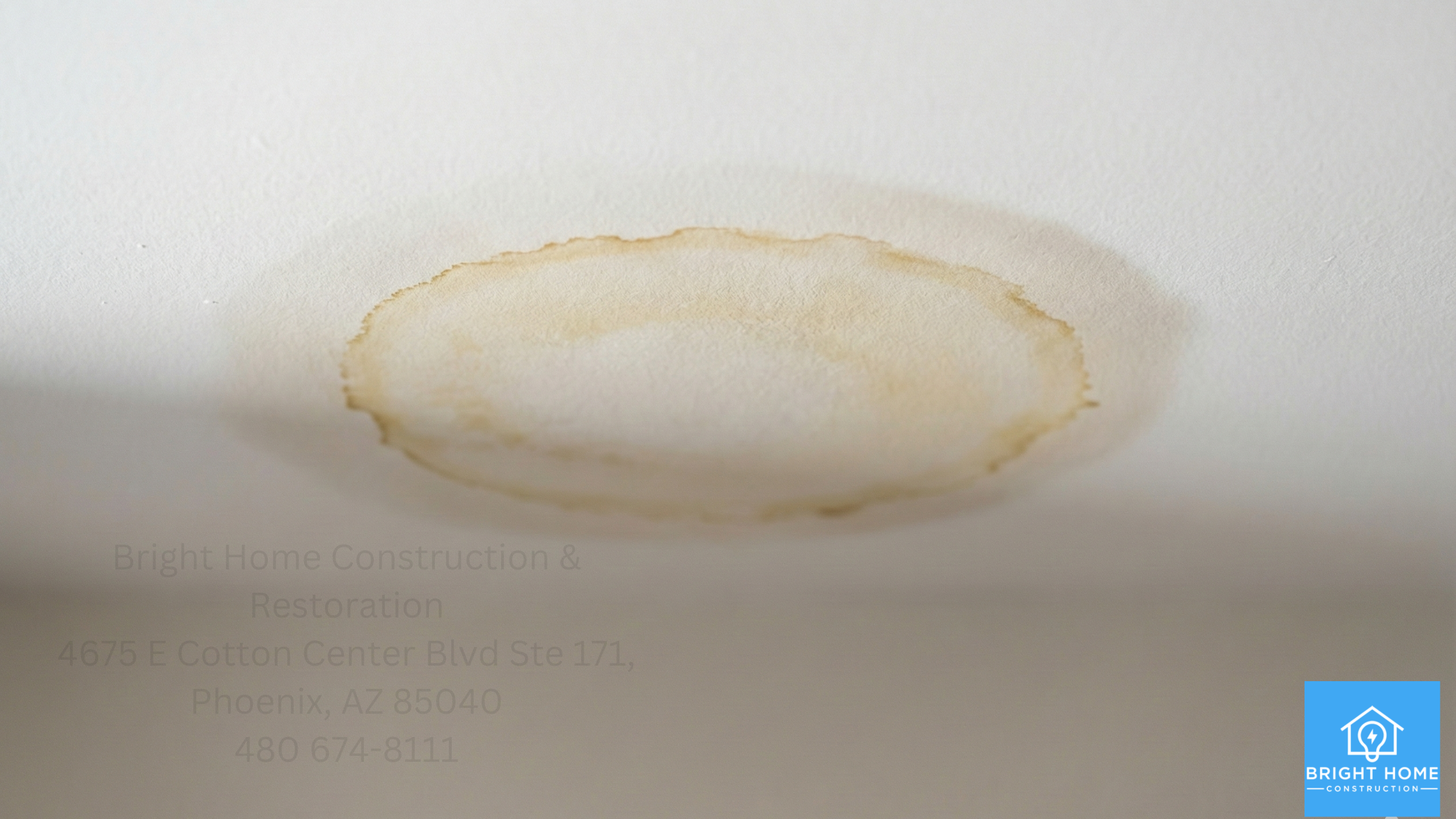
1. Yellow or Brown Stains on Ceilings
What to look for: Yellow, brown, or tan discoloration appearing on your ceiling—especially in concentrated spots or larger patches.
Why it happens: Water seeps through your roof or from pipes above, and as it dries, minerals and dust leave behind stains.
Why it matters: This is one of the most obvious red flags that water has reached your ceiling. Even if the stain looks dry now, it means water got there at some point—and it could still be happening. Roofs damaged by Arizona’s intense heat or monsoon-season storms commonly develop these stains.
What’s the risk? Stained ceilings can indicate ongoing leaks. If left untreated, the water continues to weaken the structural materials above, eventually leading to sagging or collapse.
2. Bubbling, Peeling, or Blistering Paint
What to look for: Paint that’s bubbling up, peeling away in sheets, or creating blisters on walls or ceilings.
Why it happens: Water gets trapped between the paint and the drywall or plaster underneath. As it dries and re-hydrates, it pushes the paint away from the surface.
Why it matters: This is a clear sign of moisture problems. The paint’s peeling indicates that water is either actively present or has been there recently.
What’s the risk? Once paint starts peeling, the underlying drywall is exposed and vulnerable to mold growth and further damage. This can happen quickly in Phoenix’s humid monsoon season.
3. Warped or Cupped Hardwood Floors
What to look for: Hardwood floors that are visibly warped, cupped (curled up at the edges), buckled, or soft to the touch.
Why it happens: Hardwood absorbs moisture and expands. When water sits underneath the flooring, the wood swells unevenly, creating a wavy or dish-like surface.
Why it matters: This damage is often permanent. Hardwood floors that have cupped or warped typically need to be replaced—they won’t return to normal once dry.
What’s the risk? Warped floors indicate that significant water has been present, usually from a pipe leak, flood, or ground water seeping in. The water underneath the floor is also creating an ideal breeding ground for mold.
4. Musty, Earthy Odor (The “Mold Smell”)
What to look for: A strong, distinctive musty or earthy smell that seems to come from nowhere—especially in basements, crawl spaces, or corners.
Why it happens: Mold and mildew produce volatile organic compounds (VOCs) that create that characteristic musty smell.
Why it matters: If you smell it, mold is already growing. You can’t see all mold with the naked eye—some colonies are tiny or hidden behind walls. The smell is nature’s way of alerting you.
What’s the risk? Mold poses health risks, especially for children, elderly, and those with respiratory issues. It also accelerates structural damage. A musty smell means action is needed immediately.
5. Sagging, Soft, or Spongy Ceilings or Drywall
What to look for: Ceilings that sag or feel soft when you gently press on them. Drywall that feels spongy or damp to the touch.
Why it happens: Water-saturated drywall and ceiling materials lose their structural integrity. They become weak and heavy, causing them to droop or feel mushy.
Why it matters: This is a critical warning sign. Sagging ceilings can fail suddenly, potentially causing injury or significant property damage.
What’s the risk? A sagging ceiling can collapse without warning. If you notice this, it’s time to call for emergency help—don’t wait.
6. Cracking, Flaking, or Crumbling Drywall
What to look for: Drywall that’s cracked, has chunks missing, flakes when touched, or crumbles easily.
Why it happens: Drywall is made from gypsum, which breaks down when exposed to prolonged moisture.
Why it matters: This indicates that water damage has been present long enough to compromise the drywall’s integrity. It’s past the early stage and needs professional attention.
What’s the risk? Compromised drywall cannot support weight and may allow water to spread further into walls and other structural components. Mold also thrives in deteriorating drywall.
7. Rusty or Discolored Spots Near Plumbing, HVAC, or Metal Components
What to look for: Rust-colored stains, orange/brown discoloration, or actual rust forming on pipes, water heater, HVAC system, or metal fixtures.
Why it happens: Water from leaks (or condensation) oxidizes metal over time, creating rust.
Why it matters: This is a direct indicator of active or recent water exposure. Rusty spots tell you exactly where the moisture is coming from.
What’s the risk? Corroded pipes may fail completely, leading to significant water damage. A rusty water heater or HVAC system suggests they’ve been exposed to water and may need replacement soon.
8. Wet, Damp, or Cold Carpets Without an Obvious Source
What to look for: Carpet that feels wet, damp, or unusually cold to the touch—but you can’t see a spill or source.
Why it happens: Water from below (subfloor leaks, groundwater, pipe breaks) seeps up through the carpet pad and backing.
Why it matters: This is often a sign of hidden water damage happening underneath your flooring. The damage you can’t see is usually the most serious.
What’s the risk? Wet carpet is the perfect breeding ground for mold. Mold can develop in 24–48 hours. Additionally, the subfloor and padding underneath are already damaged and may need replacement.
9. Mold Patches Appearing on Walls, Ceilings, or Around Windows
What to look for: Black, green, white, or orange fuzzy or slimy patches on surfaces. Mold commonly appears in corners, along baseboards, around window frames, or in bathrooms.
Why it happens: Mold grows wherever there’s moisture and organic material (like drywall or wood).
Why it matters: Visible mold is a health hazard and a sign of water damage. If you see mold, water damage is definitely present—and ongoing.
What’s the risk? Mold spreads quickly and aggressively. Health problems can develop with prolonged exposure. Mold remediation can be expensive if it’s spread extensively.
10. Sudden Increase in Your Water Bill
What to look for: Your water bill jumps significantly—25%, 50%, or even higher—without a change in your usage habits.
Why it happens: A hidden pipe leak is slowly dripping water, and your meter is recording it all.
Why it matters: This is often the first sign of a hidden leak—and it’s easy to miss if you don’t pay attention to your bills. A slow leak can cause massive damage over weeks or months.
What’s the risk? Hidden leaks cause damage you can’t see until it’s severe. By the time you notice water stains or mold, the leak has usually been running for a long time. Plus, you’re literally paying for water disappearing into your walls.
Hidden Signs of Water Damage: The Dangerous Ones You Can’t See
Not all water damage is visible. Some of the most serious damage happens behind walls, under flooring, and in spaces you never look.
Behind Walls and Inside Cavities
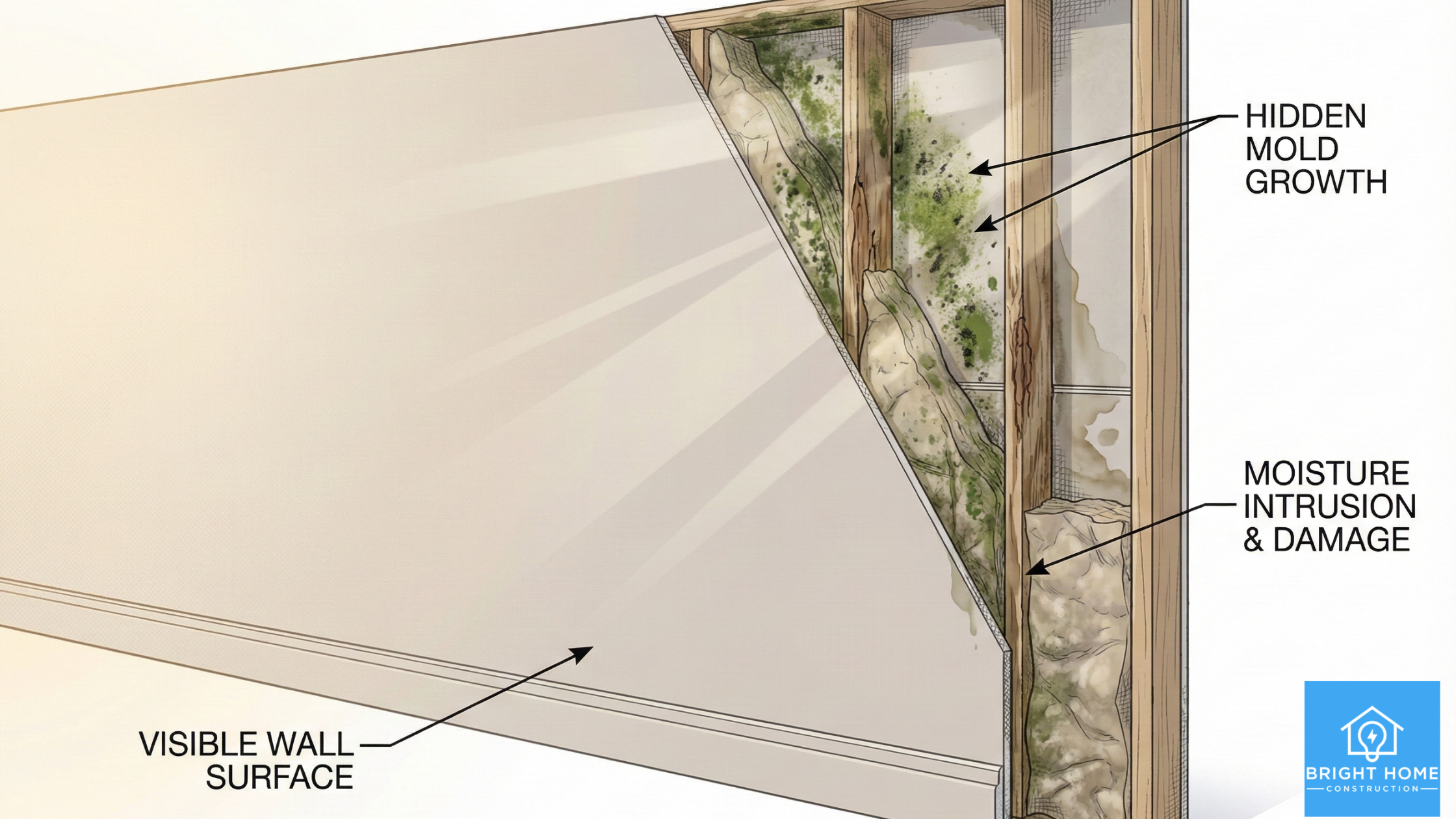
Water can travel inside your walls and sit for weeks before you notice anything. By then, mold is growing, wood framing is rotting, and electrical hazards are developing.
What to watch for:
-
Soft spots when you press on walls
-
Cracks that seem to appear suddenly
-
Discoloration spreading across a wall
-
Any changes to wall texture or surface
Under Sinks and Around Plumbing
Cabinet interiors are hidden from view, but they’re vulnerable to pipe leaks. Water can damage the cabinet floor, rot the subfloor below, and spread mold without you knowing.
What to check regularly:
-
Open cabinet doors under sinks
-
Look for soft or discolored wood
-
Check for drips or moisture
-
Feel the back wall for dampness
HVAC Condensation and Ductwork
Your air conditioning system produces condensation. If the drain line clogs or the system malfunctions, water can build up in the ducts and attic—creating a mold breeding ground.
What to watch for:
-
Water pooling near your HVAC unit
-
Musty smells coming from your vents
-
Visible mold in or around ductwork
-
Reduced airflow (can indicate water damage in ducts)
Attics and Crawl Spaces
Roof leaks and poor ventilation can cause hidden water damage in attics and crawl spaces—areas many homeowners never check.
What to do:
-
Inspect your attic annually, especially after heavy rain or storms
-
Look for water stains on rafters or insulation
-
Check for mold growth
-
Ensure proper ventilation
What To Do If You Notice These Signs
Don’t ignore them. Water damage doesn’t get better on its own—it gets worse.
Step 1: Document Everything
-
Take photos and videos of all visible signs
-
Note the date and time
-
Write down what you observed (stains, smells, wet areas, etc.)
-
Keep this documentation for your insurance claim
Step 2: Call for a Free Professional Assessment
Don’t wait. The longer you wait, the more damage spreads.
Call Bright Home Construction & Restoration at (480) 674-8111 for a free, 30-minute damage assessment. Our certified technicians will:
-
Thoroughly inspect your property for visible and hidden water damage
-
Identify the source of the water
-
Explain what they found in plain language (no confusing jargon)
-
Provide a detailed assessment and next steps
-
Help you prepare for your insurance claim
We respond within 30 minutes in the East and West Valley. Available 24/7, including holidays.
Step 3: Contact Your Insurance Company
-
Report the damage as soon as possible
-
Provide them with your photos and documentation
-
Ask which repairs are covered under your policy
-
We can help coordinate this on your behalf
Step 4: Take Action to Prevent Further Damage
While waiting for professional assessment:
-
Stop the source: If it’s a leaking pipe, shut off water to that area if you can safely do so
-
Remove standing water: If there’s water pooling, use towels or a wet-dry vacuum to remove it
-
Increase ventilation: Open windows and doors to increase air circulation
-
Don’t use the affected area: Stay out of areas with active water damage or mold
Why Early Detection Saves You Money
Here’s the math:
| Stage | Typical Cost | What’s Involved |
|---|---|---|
| Caught Early (Day 1–2) | $2,000–$5,000 | Water extraction, drying, minor repairs, mold prevention |
| Caught Late (Week 1–2) | $5,000–$15,000 | Extensive drying, some mold removal, drywall replacement, flooring damage |
| Ignored (Weeks 3+) | $15,000–$50,000+ | Complete mold remediation, structural repairs, possible foundation damage, full reconstruction |
The difference between catching water damage early and ignoring it can be tens of thousands of dollars.
A Message from Bright Home: You’re Not Alone in This
If you’re reading this because you found a water stain, smelled something musty, or noticed wet carpet—take a breath. This happens all the time in Phoenix. Our monsoon season, aging pipes, and Arizona’s extreme heat all contribute to water damage.
The important thing is that you caught it. Now you know what to do.
We’ve helped hundreds of Phoenix families restore their homes after water damage. We know how stressful this is. We know how confusing it can feel. That’s why we’re here—to handle the complicated stuff so you can focus on your family.
You don’t have to figure this out alone.
Ready to Protect Your Home?
If you’ve noticed any of these warning signs, don’t wait:
Schedule Your Free 30-Minute Damage Assessment
Call (480) 674-8111 or fill out our online form below. Our certified technicians will assess your property, explain what they find, and help you understand your next steps.
Available 24/7, including holidays. We respond within 30 minutes in the Valley.
Bonus: Download Our Water Damage Warning Signs Checklist
Use our free checklist to identify water damage early and track what you’ve observed. Perfect for keeping notes before calling a professional.
Frequently Asked Questions
How fast does mold grow after water damage?
Mold can begin growing within 24–48 hours of water exposure. This is why speed is critical when dealing with water damage.
Will my insurance cover water damage?
Coverage depends on your policy. Most homeowner’s insurance covers sudden, accidental water damage (like burst pipes). However, damage from gradual leaks or maintenance issues may not be covered. We can help you understand what’s covered and coordinate with your insurance company.
Can I clean up water damage myself?
You can remove standing water if it’s clean water from a burst pipe. However, mold remediation and structural drying require professional equipment and expertise. Trying to DIY can spread mold spores and make the problem worse. Leave it to the professionals.
What’s the difference between water damage and flood damage?
Water damage typically refers to leaks, burst pipes, or moisture intrusion. Flood damage refers to water from heavy rain, overflowing rivers, or other external water sources. Both require professional attention, but they may be handled differently by insurance.
If I ignore water damage, what’s the worst that can happen?
Mold growth (health hazard), structural damage (ceiling collapse, floor rot, foundation problems), and drastically reduced home value. It’s not worth the risk.
Act Now, Save Later
Water damage doesn’t fix itself. It gets worse—sometimes dramatically. But the good news? If you catch it early, the solution is straightforward and affordable.
The next time you notice a stain, a smell, or something “off”—don’t dismiss it.
Trust your instincts. Call for a professional assessment. Document what you see. And remember: every hour you wait is an hour the damage is spreading.
We’re here 24/7 to help. Phoenix families trust Bright Home because we show up fast, we explain everything clearly, and we get it done right.
Call (480) 674-8111 today for your free assessment. Or fill out our online form to schedule.
Bright Home Construction & Restoration
Serving Phoenix, Tempe, Mesa, Scottsdale, Gilbert, Glendale, Chandler, Peoria, and Surprise
(480) 674-8111 — Available 24/7
www.brighthomeconstruction.com
4675 E Cotton Center Blvd Ste 171, Phoenix, AZ 85040
Licensed – Bonded – Insured – Accredited